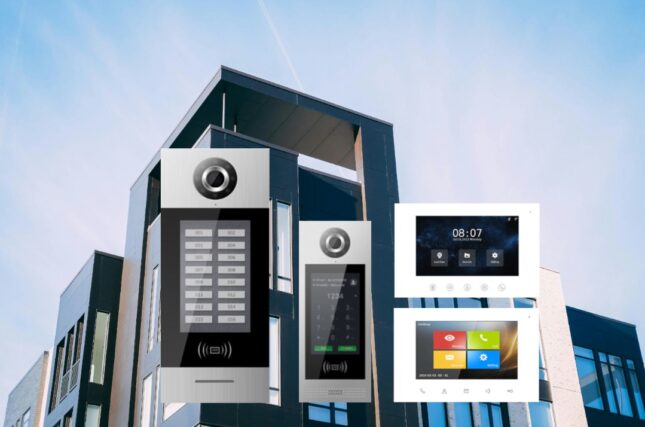
Wireless intercom systems use radio frequency or 4G connectivity to connect door entry panels with residents’ smartphones or dedicated devices, eliminating the need for complex cabling throughout apartment buildings. These systems have transformed how property managers handle access control, with the UK market growing by 24% annually according to a 2024 ABI Research report on smart building technologies.
For housing associations and property managers overseeing multiple sites, wireless solutions offer immediate cost advantages, installation takes 50-70% less time than traditional wired systems, and there’s no need to access individual flats during setup. That means less disruption for tenants and significantly lower labour costs.
How Wireless Intercom Technology Actually Works
Modern wireless intercoms rely on two primary communication methods: local Wi-Fi networks or independent 4G cellular connections. The 4G approach has become increasingly popular in the UK because it doesn’t depend on building Wi-Fi infrastructure, which can be unreliable or non-existent in older properties.
Here’s the typical architecture:
Entry panel → 4G/Wi-Fi connection → Cloud server → Resident’s smartphone
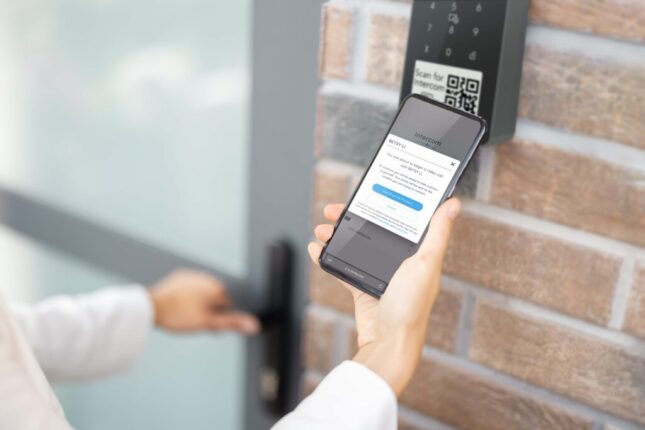
When someone presses a flat number at the entrance, the system routes the call through internet connectivity rather than physical wires. The resident receives a notification, sees who’s at the door via video feed, and can grant access remotely, even if they’re not home.
The door release mechanism still requires one power cable to the electric strike or magnetic lock, but that’s exponentially simpler than running Category 5 cables to every flat. According to research from the Chartered Institute of Housing, this infrastructure difference reduces initial installation costs by £3,000-£8,000 for a typical 50-unit building.
Authentication happens through encrypted digital signals. When a resident grants access, the system sends a secure command to unlock the door for a pre-set duration (usually 3-5 seconds). Most systems log every entry attempt, creating an audit trail that’s particularly valuable for housing associations managing high-turnover properties.
Benefits That Actually Matter to Property Managers

Faster Installation Without Tenant Disruption
The biggest practical advantage isn’t just speed, it’s access. Traditional wired systems require engineers to enter every single flat to install handsets and run cabling. That means coordinating dozens of appointments, dealing with no-shows, and often returning multiple times for absent residents.
Wireless systems flip this model entirely. Engineers install the external panel and door controller, then residents download an app. Installation at a 60-flat development in Manchester took three days with a wireless system versus the three weeks originally quoted for a wired alternative, according to a case study published by the National Housing Federation.
Reduced Ongoing Maintenance
Physical handsets fail. They get damaged, wear out, and need replacing. Each replacement requires another engineer visit and flat access. Wireless systems shift this responsibility to residents’ own devices, which they maintain and upgrade themselves.
A 2023 survey of UK housing associations by Inside Housing found that maintenance calls for intercom issues dropped by 68% after switching to wireless systems. The systems still need occasional attention, mainly firmware updates and battery replacements in wireless panels, but these are done remotely or at the entrance only.
Better Tenant Experience
Residents can answer their door from anywhere. They’re not tied to being physically present in their flat or within range of a handset. This flexibility particularly benefits:
- Working professionals who can grant access to delivery drivers during work hours
- Elderly or mobility-impaired residents who struggle to reach traditional entry phones quickly
- Students in shared accommodation who aren’t always home during daytime deliveries
The ability to see visitors via video before granting access also improves security perceptions. According to the Crime Survey for England and Wales, properties with video verification report 34% fewer instances of unwanted entry compared to audio-only systems.
Scalability for Multi-Site Management
Housing associations often manage dozens of buildings across different locations. Wireless intercom systems with cloud-based management portals allow property managers to control access across entire portfolios from one dashboard.
Need to grant temporary access to a contractor visiting five different sites? You can issue time-limited virtual keys remotely. A resident loses their phone? You can deactivate their access and provision a new device within minutes, without any site visit.
Common Concerns and Real-World Answers

“What happens if the internet goes down?”
Legitimate concern. Most quality systems include backup protocols. Some store access credentials locally on the entry panel, allowing registered residents to enter using PIN codes or RFID cards even during connectivity loss. Others use dual connectivity, switching between Wi-Fi and 4G automatically.
The critical factor is choosing systems with offline functionality. Specifications should explicitly state how the system behaves during network interruptions. According to Ofcom’s 2024 UK Communications Market Report, average 4G network availability is 99.6%, meaning outages are relatively rare but still need planning for.
“Are smartphone apps too complicated for elderly residents?”
This varies significantly by implementation. The best systems use simple interfaces with large buttons and clear labels. Many elderly residents already use smartphones for video calls with family, so the concept isn’t foreign, it just needs to be intuitive.
That said, hybrid approaches work well in mixed-age developments. Systems that support both app-based access and optional physical handsets or simple push-button devices give residents choice. Age UK research indicates that 73% of over-65s in the UK own smartphones as of 2024, up from 52% in 2020, suggesting this concern is diminishing but still relevant for some demographics.
“What about data security and privacy?”
Cloud-based systems process and store data about who enters buildings and when. This requires GDPR compliance, particularly around data retention policies and resident consent.
Reputable manufacturers implement end-to-end encryption for video and audio streams, and should be able to provide documentation on their data handling practices. Housing associations should look for systems certified to BS EN 62676 (video surveillance systems) and Cyber Essentials certification as baseline security standards.
The Information Commissioner’s Office published guidance in 2023 specifically addressing access control systems in multi-occupancy buildings, emphasising that residents must be informed about what data is collected and how long it’s retained.
Installation Considerations for UK Properties
Listed Buildings and Conservation Areas
Many UK apartment buildings have architectural protections that restrict exterior modifications. Wireless systems offer advantages here because they typically require smaller entry panels and no visible external cabling.
However, you’ll still need listed building consent or conservation area approval for any external installation. The key is working with planners early, emphasising that wireless technology minimises visual impact compared to traditional alternatives. Historic England’s guidance on “Energy Efficiency and Historic Buildings” acknowledges that modern access control can be compatible with heritage protection when sensitively installed.
Existing Infrastructure Integration
Few properties start from scratch. You’re usually replacing existing systems, which means dealing with legacy infrastructure, old cabling, existing electric strikes, and sometimes peculiar custom setups from previous decades.
The advantage of wireless is that you can often reuse existing door hardware (strikes, closers, release buttons) while replacing just the communication layer. A thorough site survey before procurement is essential. Engineers need to assess:
- Current power supply locations and capacity
- Door hardware condition and compatibility
- Mobile signal strength (for 4G systems)
- Wi-Fi coverage (for Wi-Fi-dependent systems)
Properties with poor mobile reception might need external aerials or Wi-Fi-based alternatives. According to Ofcom data, approximately 5% of UK premises still have limited 4G coverage, primarily in rural areas.
Fire Safety and Building Regulations
Door entry systems interact with fire safety provisions, particularly regarding secure-by-day principles where entrance doors unlock automatically during fire alarm activation. BS 5839-1:2017 sets requirements for fire detection and alarm systems, and your intercom must integrate with these.
Modern access control solutions typically include fire alarm input connections that automatically release all secured doors when triggered. This is non-negotiable from both regulatory and liability perspectives. Your installer should document this integration as part of building control approval.
Since the Building Safety Act 2022, there’s heightened scrutiny on access control in residential buildings over 18 metres. While intercoms aren’t directly addressed by the Act, building owners are responsible for ensuring all systems work together coherently, including fire safety integration.
Cost Comparison ─ Wireless vs. Traditional Systems
Real-world costs vary enormously based on building size, specification, and site-specific factors. However, industry data provides useful benchmarks.
Initial Installation (50-flat building, typical specification)
- Traditional wired system: £15,000-£25,000
- Wireless 4G system: £8,000-£15,000
The wireless saving comes almost entirely from labour. Hardware costs are comparable, sometimes slightly higher for wireless. But you’re cutting out hundreds of hours of cable installation, decoration making good, and individual flat appointments.
Annual Maintenance Costs
- Traditional system: £800-£1,500 (assuming 10-15 handset replacements, 2-3 panel repairs)
- Wireless system: £300-£600 (mainly firmware updates, occasional panel battery replacement)
Data from the Association of Residential Managing Agents suggests typical maintenance costs drop by 60-70% after switching to wireless systems.
Subscription Costs
Here’s where wireless has an ongoing expense that wired systems don’t. Most 4G wireless intercoms require monthly connectivity fees, typically £15-£40 per building depending on data usage and features. Over 10 years, this adds £1,800-£4,800 to total cost of ownership.
Even accounting for subscriptions, wireless systems typically reach cost parity with traditional systems within 3-4 years, after which they deliver net savings.
Choosing the Right System for Your Building
Resident Demographics
Student accommodation has different needs than retirement housing. Students expect app-based access and often prefer no additional devices to lose or damage. Elderly residents might value having a physical handset as backup, even if they primarily use the app.
Mixed developments need flexibility. Systems offering multiple access methods, app, RFID card, PIN code, accommodate different preferences without compromising on the wireless infrastructure advantages.
Building Construction
Concrete and steel construction significantly affects wireless signal propagation. A 4G system that works perfectly in a brick Victorian conversion might struggle in a modern steel-frame building with metallised insulation.
Site surveys with signal strength testing aren’t optional, they’re essential. Some manufacturers provide loan equipment for pre-installation testing. If 4G is marginal, Wi-Fi-based systems or signal boosters might be necessary.
Management Structure
Are you managing the building yourself or working through a residents’ management company? Self-managed buildings often prefer systems with simpler interfaces and less frequent management needs. Professional management companies might want more sophisticated platforms with detailed reporting and integration with other building systems.
Future Expansion
Will you be retrofitting additional access control points, car park barriers, communal room doors, parcel lockers? Systems with open APIs or common protocols (Wiegand, OSDP) offer easier expansion. Proprietary systems lock you into one manufacturer’s ecosystem, which can be limiting if your needs evolve.
Making the Business Case to Residents or Directors

If you’re managing but don’t own the property, you’ll need buy-in from residents’ associations or freeholder directors. The business case centres on three points:
1. Reduced service charge impact over time
Lower maintenance costs translate directly to service charge savings. Model this over 5-10 years to show cumulative benefit. A £1,000 annual maintenance saving in a 50-flat building reduces individual service charges by £20 per flat per year, a tangible benefit residents understand.
2. Property value enhancement
Modern access control is increasingly expected by buyers and renters. Estate agents report that properties with smart intercom systems rent 7-10% faster than comparable properties with dated entry systems, according to research by Propertymark, the UK’s leading professional body for estate agents.
3. Security and convenience improvements
Video verification reduces unwanted access. Remote door release helps with deliveries and visitor access. These aren’t just theoretical benefits, they directly affect residents’ daily experience and security perceptions.
Frequently Asked Questions
How long does installation typically take for a 40-flat building?
Most wireless installations complete in 2-4 days for buildings of this size. The process involves mounting the external panel, installing the door controller, configuring the cloud platform, and testing. Resident onboarding (app downloads and training) happens afterward and doesn’t require engineer presence.
Can residents still get in if their phone battery dies?
Yes, if the system supports alternative access methods. Most systems offer optional RFID cards or PIN codes as backup. However, this reduces some of the cost advantages since you’re now managing physical credentials again. Better approach is educating residents to keep phone chargers accessible and enabling battery-saving modes.
What happens when a resident moves out?
Administrators deactivate the resident’s access credentials remotely through the management portal. This takes about 30 seconds. The new resident receives new credentials, usually by email or SMS, during their move-in process. No engineer visit or reprogramming needed.
Do these systems work with existing door entry trade buttons?
Usually yes. Trade access (for postal workers, delivery services, etc.) typically uses separate credentials that bypass individual flat calling. These can be programmed as PIN codes or RFID cards. Some systems integrate with Royal Mail’s Keystone system for postal access.
Are wireless systems approved for new-build developments?
Absolutely. Building regulations don’t mandate wired versus wireless, they specify functional requirements around fire integration, disabled access, and security. Wireless systems can meet all these requirements. Many volume housebuilders now specify wireless as standard because of installation cost and speed advantages.
How reliable are these systems compared to traditional intercoms?
Reliability data from manufacturers shows 99%+ uptime for quality wireless systems. Traditional systems also fail, usually from handset damage or cabling faults. The difference is that wireless systems can often be diagnosed and repaired remotely, while wired systems need engineer call-outs. Mean time to repair is typically 2-4 hours for wireless versus 2-4 days for traditional systems, according to data from facility management companies surveyed by the British Institute of Facilities Management.
Implementation Checklist
Before proceeding with wireless intercom installation:
- Conduct site survey including mobile signal testing
- Verify power supply capacity at entrance locations
- Check planning requirements (listed buildings, conservation areas)
- Confirm fire alarm integration requirements
- Review data protection impact assessment
- Get resident approval (if required by lease terms)
- Plan resident communication and training strategy
- Arrange building control notification (if required)
- Confirm ongoing subscription costs and terms
- Verify warranty and support arrangements
The shift to wireless intercoms isn’t just about keeping up with technology trends. It’s about reducing operational costs, improving resident satisfaction, and simplifying building management.
For UK property managers dealing with increasingly complex compliance requirements and budget pressures, wireless systems offer practical advantages that translate directly to better building operations and lower long-term costs.